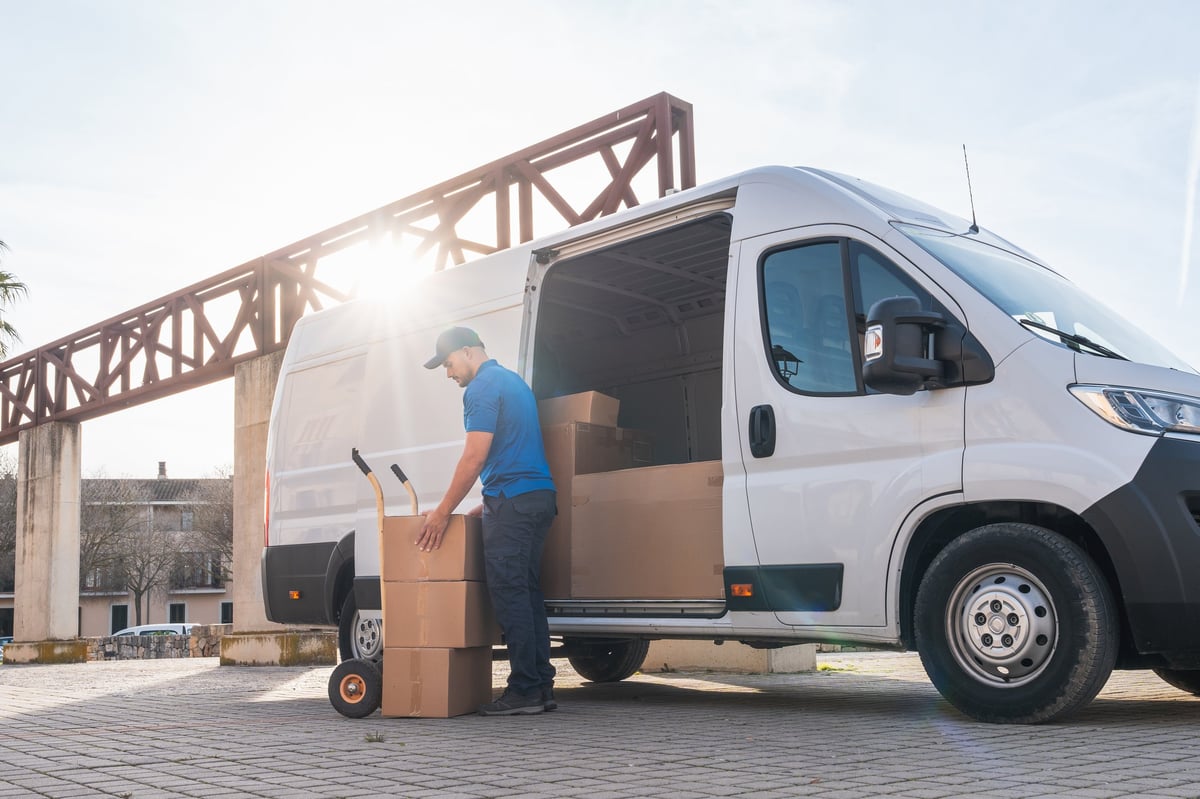
Same-day and last-mile delivery platform for businesses seeking faster, more reliable local delivery — improve customer experience with modern delivery infrastructure.
Request Cost Reduction ReviewSame-day and hyper-local delivery has become a competitive necessity across retail, food service, pharmacy, and B2B distribution. Building in-house delivery fleets is capital-intensive and operationally complex — requiring vehicle acquisition, driver management, routing technology, insurance, and maintenance infrastructure.
Hypr Delivery provides a network-based approach to last-mile delivery — connecting businesses with on-demand delivery capacity without the fixed costs of an owned fleet. For organizations already managing delivery operations, a structured review can identify whether your current approach is cost-competitive or whether alternative models may reduce per-delivery costs.
Taycan Advisors provides confidential review of your delivery operations — comparing current costs against network-based alternatives, evaluating service-level alignment, and identifying where delivery model changes may reduce cost or improve speed.
Executive Brief
Last-mile delivery can represent 40% to 55% of total supply chain cost. For businesses competing on delivery speed — retailers, food service, pharmacy, B2B distributors — the pressure to offer same-day or next-day delivery while controlling per-delivery cost has never been greater. Yet many organizations default to building or maintaining owned fleets without regularly comparing the economics against modern network-based alternatives.
Vehicle acquisition, depreciation, maintenance, fuel, insurance, and parking — fixed costs that persist regardless of delivery volume.
Recruitment, training, scheduling, turnover, benefits, and compliance — labor-intensive functions that distract from core operations.
Owned fleets rarely achieve the route density of network aggregators, leading to higher per-stop cost and excess capacity during off-peak periods.
Same-day and hyper-local delivery review delivers the most value for businesses where delivery speed is a competitive factor and current delivery costs are significant.
Businesses competing on delivery speed — same-day, next-day, and local delivery — where customer expectations have been shaped by major platforms.
Restaurants, ghost kitchens, caterers, and food service businesses managing delivery operations or evaluating delivery platform economics.
Wholesale and distribution businesses with local delivery routes seeking to optimize per-stop costs, route density, and delivery speed.
We bring operational and logistics advisory expertise to help organizations evaluate delivery models — comparing costs, service levels, and scalability of owned versus network-based approaches.
We analyze your current per-delivery cost, route density, vehicle utilization, driver cost, and service levels to establish a baseline for comparison.
We compare your current delivery model against network-based alternatives — evaluating cost, speed, coverage, reliability, and scalability differences.
We do not receive fees or commissions from delivery providers. Our recommendation is based solely on what is best for your operations and cost structure.
We provide a practical transition plan — whether optimizing your current fleet, adopting a hybrid approach, or moving fully to network-based delivery.
Last-mile delivery is typically the most expensive segment of the supply chain. A structured review often reveals opportunities to reduce per-delivery cost or improve service levels.
Network-based delivery models can reduce per-delivery costs compared to maintaining an underutilized owned fleet. Variable-cost models align delivery expense with order volume.
Network-based delivery can extend geographic coverage and reduce delivery windows without adding fleet assets — improving customer experience while controlling costs.
Avoiding or reducing owned fleet eliminates vehicle acquisition, maintenance, insurance, fuel management, and driver recruitment costs — converting fixed costs to variable.
Network aggregators can combine deliveries across multiple businesses on shared routes — achieving density that individual fleets cannot, reducing per-stop cost and environmental impact.
Review shipping, freight, and fulfillment operations for cost reduction and efficiency.
Review technology vendor spend, software subscriptions, and IT contracts for optimization.
Review wireless plans for redundant lines, unused features, and over-market pricing.
Equipment leasing, SBA loans, term loans, bridge financing, and more.
What Gets Reviewed
A practical review of same-day and last-mile delivery operations — including fleet utilization, routing efficiency, driver cost, technology platforms, and customer delivery experience — to identify where cost and service improvements may be found.
Route optimization, dispatch technology, delivery density, and how routing efficiency affects driver utilization and per-delivery cost.
Employee drivers vs. independent contractors vs. third-party courier — comparing cost, reliability, scalability, and compliance implications.
Delivery management platform, real-time tracking, proof of delivery, customer communication, and integration with order and inventory systems.
Delivery speed, time-window accuracy, customer satisfaction metrics, and the cost-to-service tradeoffs in last-mile delivery operations.
FAQ
A short discussion can determine whether last-mile delivery optimization is worth deeper review for your operation. No obligation — just practical perspective from senior advisors.